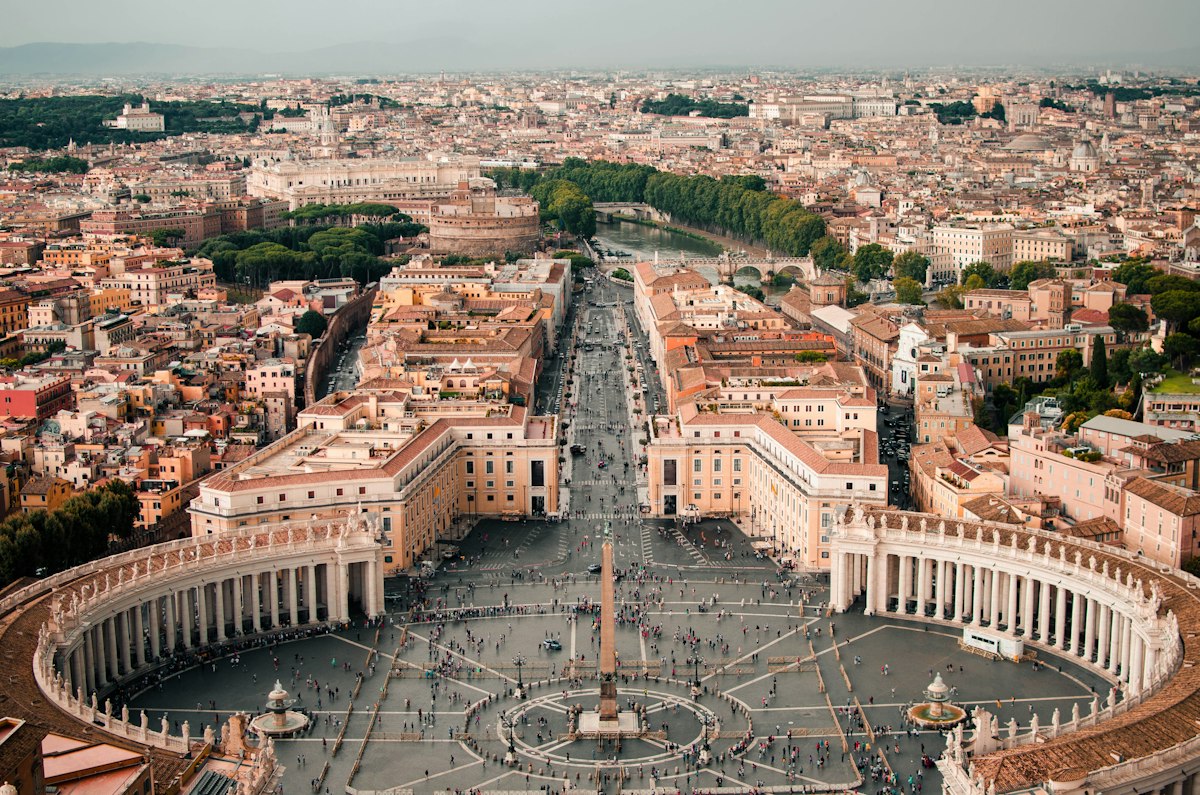
Location scouting for feature films and TV productions in Italy is now a two to four month process, with permit timelines ranging from two weeks in Lazio to six weeks in Veneto. This guide covers the exact permit procedures across all regions, realistic fixer costs (EUR 200 to 400 per day), ENAC drone licensing rules, and how to leverage regional film commissions to compress timelines by 30 percent.
The regional permit hierarchy: Lazio, Campania, Toscana dominate film permissions
Italy does not have a single national film permitting authority. Instead, every region manages its own permissions, and within regions, cities and heritage sites (like the Parco Colosseo in Rome) impose additional restrictions. The fastest regions for permits are Lazio (Rome, Vatican area), Campania (Naples, Amalfi, Pompeii), and Toscana (Florence, Siena), where established film commissions process permits in two to three weeks. The slowest are Veneto (Venice, Verona, Padua), where the regional film commission operates from a limited staff and timelines hit six weeks even for straightforward shoots. Understanding these regional differences at the location-scouting stage is critical. A production that commits to Rome gets permits in 10 to 14 days for non-heritage street locations; a production that commits to Venice faces 30 to 42 days minimum for the same permit class. This difference compounds across a multi-location shoot. A five-location Rome scout takes 8 to 10 weeks total (two weeks per location assuming sequential approvals); the same five locations in Veneto take 16 to 20 weeks, compressing your pre-production calendar by an entire quarter.
Lazio film permissions flow through the Roma Capitale Cinema Office, which has separate procedures for interior studio shoots (Cinecitta Studios), street locations within the Aurelian Walls, heritage sites (requiring MIC Ministero della Cultura approval), and EUR district (European Exhibition Area, post-war modernist zone). A standard street scene in a non-heritage area of Rome takes 10 to 14 business days. A heritage site like the Colosseum or Spanish Steps requires MIC approval, which adds 15 to 25 additional days. Vatican City locations require Vatican permissions, which operate independently and can take six to eight weeks. The Roma Capitale Cinema Office has invested heavily in streamlining the non-heritage process, introducing an online submission portal in 2024 that allows permits to be requested and tracked in real time. This digital workflow is gradually being adopted by other regions, but Roma Capitale leads in speed and transparency. They maintain a published list of pre-approved locations (piazzas, streets, publicly-owned buildings) where permits are almost automatic, with turnarounds of five to seven business days. Strategic location choice in Rome means prioritizing these pre-approved sites first and reserving the more complex heritage-site approvals for sequences that truly require them.
Campania (governed from Naples) has been aggressive in modernizing its film commission. Permits for street shooting in Naples proper are now 10 to 15 business days, and Amalfi Coast shoots (which require provincial approvals) run 14 to 21 days. Toscana (Florence region) processes within two to four weeks. Smaller regions like Sardegna, Sicily, and Liguria often lack dedicated film commissions and route permits through provincial tourism offices, which adds two to four weeks to all timelines. Strategic choice of region at scouting stage can compress your total pre-production timeline by a full month. The cost of this regional choice is material. A production that chooses Toscana over Veneto saves not only four to six weeks in calendar time (which translates to reduced overhead, holding crew on standby, and delayed revenue generation), but also approximately EUR 15K to 30K in additional fixer fees, extended crew per diem, and accommodation costs during the permitting delay. A two-week scouting timeline in Toscana versus six weeks in Veneto is the difference between a tight, focused pre-production and one that haemorrhages budget before a single frame is shot.
Fixer costs, crew hiring, and ENAC drone licensing 2026
A production fixer in Italy charges EUR 200 to 400 per day depending on region and complexity. In Rome, a fixer who knows the Roma Capitale Cinema Office staff and can navigate heritage-site approvals costs EUR 350 to 400 per day (8 hours). In Naples or Florence, EUR 250 to 300 per day. In smaller regions, EUR 200 to 250 per day. A typical location scout that requires fixer support (three to five locations, handling permits, insurance, and local liaison) costs EUR 1,800 to 3,200 for a five to ten day scouting trip. This is a direct booking cost that cannot be reduced through aggregation or platform commissions because it is individual expert time. However, fixers also bring force multipliers to your production that justify the cost. A Rome fixer who has worked with the Roma Capitale Cinema Office for five to ten years knows which permits are approvable, which will face delays, and which alternative locations can substitute if the primary location falls through. This institutional knowledge is worth EUR 5K to 15K in timeline compression and contingency planning alone. A production that tries to self-manage permits to save fixer fees typically discovers, three to four weeks in, that a crucial location approval is stalled waiting for signatures or documentation, and then has to hire a fixer anyway while accepting the timeline delay.
ENAC (Ente Nazionale per l'Aviazione Civile, Italian civil aviation authority) requires all drone operators in Italy to hold a Part 107 equivalent license (Patentino Pilota APR) and must register each flight in the Integrated Management System (GIMS). For film production use, drones are classified as non-recreational use, which mandates insurance (EUR 300 to 600 per month for standard production coverage), a minimum EUR 1 million liability policy, and formal airspace approval from local air traffic control 10 to 15 days in advance. ENAC has no exceptions for low-altitude or brief flights. A single drone shot in Rome interior to exterior requires ENAC notification, approximately EUR 100 to 200 in administrative fees and processing. The practical implication is that drone work in Italy is not a zero-cost addition to a shoot; it requires advance planning, licensed operators, insurance bonds, and administrative lead time equivalent to a small location permit. Budgets that assume "we'll do a drone shot of the sunset over the piazza for free" are budgets that will discover, at shoot time, that the drone work was not approved and cannot happen. Italian airspace is tightly controlled, and ENAC audits non-compliance vigorously. The penalties for flying drones without ENAC approval are EUR 1,000 to 5,000 fines plus potential equipment confiscation.
Italian crew hiring through established agencies (Aziende Teatrali Italiane, ATI-affiliated services) runs standard union rates (SLC/CGIL collective bargaining agreements). A gaffer or key grip costs EUR 350 to 450 per 12-hour day. A production assistant costs EUR 150 to 200 per day. Union rules mandate 12-hour maximum shifts, one-hour lunch break, and one hour of breakdown (load-out) paid at full rate. Holiday premiums (100 percent bonus on 15 August, 8 December, Christmas, Easter) apply year-round, not just public holidays, which means shooting during the summer or around Christmas automatically doubles crew labour costs for those days. Hiring non-union crew is possible but risks labour disputes with CGIL, which can halt production and result in significant fines. Italian labour law allows unions to picket and halt work on productions employing non-union crew, and the penalty is not a bureaucratic fine but a full production stoppage, often lasting days until the dispute is resolved. Many major international productions (Netflix, HBO, Marvel films) have experienced multi-day halts due to union disputes over crew hiring practices. The safest approach is to hire through union-approved agencies from the beginning and budget accordingly for holiday premiums and extended shift penalties.
MIC Ministero della Cultura approvals for heritage sites
The Italian Ministry of Culture (MIC) oversees all UNESCO, heritage, and protected-status locations. MIC approval is required for any filming at: Colosseum, Roman Forum, Palatine Hill, Vatican museums (separate from Vatican permissions), any World Heritage site, any regional monument, archaeological zones, and churches designated as national heritage. MIC applications must be submitted through the Roma Capitale Cinema Office (for Rome sites) or the regional Superintendence (Soprintendenza) for provincial sites. Processing time is 15 to 30 days for straightforward documentary or educational productions, and 25 to 40 days for narrative feature films, commercials, or productions with non-European financing. The perceived commercial intent of the production significantly affects MIC approval speed. A independent European feature film faces 15 to 25 day timelines; a US studio feature or major streaming platform production faces 30 to 40 day timelines because MIC views commercially-backed international productions as having higher exploitation potential and requires more rigorous cultural-impact review.
MIC charges a concession fee based on estimated commercial value and audience reach. An independent feature film pays EUR 500 to 2,000 for a single-day shoot at a major heritage site. A major studio production or commercial pays EUR 3,000 to 10,000 per day. Netflix-equivalent budgets face higher rates due to perceived commercial exploitation. The concession fee is explicitly tiered based on the producer's country of origin and budget class, and MIC will negotiate. A EUR 5 million UK production typically pays EUR 5,000 per day at the Colosseum; a EUR 30 million US production pays EUR 8,000 to 10,000 per day. MIC also reserves the right to require that a cultural or educational representative be present during filming, which adds EUR 150 to 250 per day in mandatory staff costs. This representative has authority to halt filming if MIC deems that the production is damaging the site or violating the approved conditions. In practice, MIC representatives are professional and non-intrusive, but their presence eliminates the notion of a private or fully-controlled set. They are observers, not creative input, but they are present and they can stop the shoot.
MIC can mandate that certain scenes be shot outside of peak tourism hours (Rome Colosseum shoots must often happen at 6 to 8 AM), which compresses shooting schedules and forces crew to work early-morning shifts when efficiency is lowest. Early-morning shoots cost 10 to 15 percent more in crew labour (shift premiums, earlier call times, reduced productivity from cold-start work). A Colosseum shoot approved only for 6 to 8 AM slots means you get 120 minutes of viable light, which is enough for two to three camera setups if the work is pre-planned and rehearsed perfectly. No pickup shots, no coverage padding, no "let's try a wide version." MIC-mandated time windows force precision planning and eliminate schedule flexibility. Many productions abandon iconic heritage sites not because permits are denied, but because the time-window constraints make efficient shooting impossible and the deadline penalties become punitive.
Timeline compression: start permits 10-12 weeks before principal photography
The realistic permitting timeline for a feature film shooting in Italy is 10 to 14 weeks from location scout completion to first day of principal photography. Week 1 to 2: finalize locations and confirm fixer engagement. This week is not bureaucratic; it is creative. The location scout delivers five to ten candidate locations per scene, and the production must select the final location, negotiate access, and confirm with the director and cinematographer that the location works for the intended shots. Week 3 to 4: submit permits to Roma Capitale Cinema Office or regional equivalent (SLA 10 to 14 business days for non-heritage, 15 to 25 for heritage). Week 5 to 6: receive permit conditions, arrange insurance, confirm local crew availability. Insurance is often a blocker at this stage. Italian film insurance is underwritten by a handful of brokers, and if your production timeline is tight (many productions discover insurance needs four to five weeks before shooting), you may find that the insurance company requires medical exams or additional documentation that adds one to two weeks to binding.
Week 7 to 9: obtain MIC approvals if heritage sites are involved (15 to 40 days). MIC approval is the variable that most often causes timeline slippage. If you have submitted a permit application for a heritage site in week three and MIC approval is in week nine, you have consumed six weeks but you are still dependent on an undetermined MIC timeline. If MIC takes 35 days instead of 25 days, your timeline just shifted by ten days. This is why sophisticated productions run scenario planning: identify which permits are critical-path (blocking principal photography if delayed) versus nice-to-have (backup locations if delayed). A shoot that has critical-path heritage-site permits should request MIC approval within 15 days, accepting a higher concession fee or more restrictive time windows in exchange for expedited processing. Weeks 10 to 12: finalize logistics, arrange traffic control, book accommodation for crew. Week 13 to 14: buffer for unexpected delays or conditions changes. This two-week buffer is not optional. Almost every production experiences at least one permit condition, one crew availability change, or one insurance clarification that consumes three to five days.
The single biggest timeline compression lever is engaging the regional film commission early. Lazio's Roma Capitale Cinema Office and Toscana's Florence Regional Film Commission have pre-approved location lists and relationships with property owners who have standing permits, which can reduce permitting from 10 weeks to six weeks. Requesting a regional film commission representative to review your shooting plan before formal submission often identifies and resolves bottlenecks at week three instead of week eight. Most Italian regional film commissions offer this service for EUR 300 to 800 and the ROI in schedule compression is nearly always positive. The film commission representative acts as a translator and expediter, explaining to municipal officials why the production should be approved, flagging potential objections before they become formal rejections, and building procedural shortcuts that shave days from the standard timeline. A second compression technique is running parallel workstreams. While waiting for heritage site MIC approvals (four to six weeks), simultaneously scout and permit non-heritage backup locations and arrange drone and traffic-control logistics. This running-in-parallel approach means you spend weeks two through six on heritage approval while also locking in non-heritage permits, crew, and logistics in the same window. Sequential permitting adds four to six weeks; parallel permitting absorbs that time into the same calendar span.
Insurance, traffic control, and location releases
Italian film production insurance runs EUR 1,500 to 4,000 per week depending on budget. A standard EUR 1 million general liability policy plus EUR 5 million errors and omissions is mandatory and required by every regional film commission and heritage site. If the production involves stunts, animals, vehicles, or hazardous materials, the cost rises to EUR 3,000 to 6,000 per week. Italian insurance brokers (UNIPOL, Generali, AXA Italia) specialize in film insurance and can bind policies in two to three business days. Budget applications must be submitted to the Roma Capitale Cinema Office or equivalent as proof of solvency before the permit is issued. Insurance is not merely a box to check; it is a gate that opens permitting. A production without proof of insurance will not receive a permit, period. The proof-of-insurance document (lettera di copertura assicurativa) is required at permit application time, not after approval. If your insurance broker takes five days to issue the proof letter and your permit clock started three days ago, you have already lost two days of your 10-to-14 day SLA.
Traffic control for street scenes costs EUR 600 to 1,500 per day in Rome and Florence, EUR 400 to 800 per day in secondary cities, and EUR 300 to 500 per day in smaller towns. This covers uniformed police (Vigili Urbani or Carabinieri) supervision, crowd management, vehicle blocking, and street closure signage. Italian municipalities require that traffic control be managed by licensed agencies (there are roughly 15 accredited firms per region), and street permits cannot be issued without confirmed traffic-control booking. Booking traffic control is often the longest single logistical lead item, with six to eight week waits in summer peak. Off-season (November to April) and weekday shoots (Monday to Thursday) cut waiting time to two to three weeks. A production that books traffic control before permitting speeds up the entire process. Traffic control agencies work on a first-booked-first-served basis, and once you have a confirmed booking (usually requires 25 to 50 percent deposit), the municipal permit office will approve the street closure almost automatically, knowing that the traffic-control infrastructure is already in place.
Location releases from property owners are simple in Italy: a one-page Autorizzazione di Ripresa (filming authorization) document, signed by the property owner or their representative, stating location, dates, and estimated crew size. No standardized legal template exists; most production companies use a template from their Italian legal counsel or adapt an English-language template through a studio legal contact. Private properties need releases. Public spaces in parks and piazzas do not require owner releases but do require municipal permits and usually traffic control. Cultural property releases are negotiated by the regional film commission or Roma Capitale Cinema Office and are included in the permit process. The release document must specify that the owner is granting permission for filming (uso cinematografico), not just allowing access. A generic "access permission" signed by a property owner is not the same as a filming authorization, and disputes about what was permitted have delayed shoots by days while lawyers negotiated the ambiguity in a casual handshake.
Why direct booking matters for this service
Every topic in this guide comes back to the same economic reality: the OTA commission model adds 15 to 22 percent to the price a traveller pays Italian accommodation operators, while adding nothing to the quality or reliability of the stay. Direct Bookings Italy’s 111,000+ verified Italian properties exist to eliminate that markup. On a typical group or long-stay booking, the savings land at 15 to 25 percent of the list price, and the service flexibility (date changes, extensions, master billing, early breakfast, custom meals) is materially better than OTA support lines can offer.
The second reason direct booking matters here is operational. Italian accommodation is mostly small independent operators, many family-run, where the person answering the phone is the person who owns the business. That relationship is where the real flexibility lives: a last-minute room block addition for an extra pilgrim, a crew kitchenette negotiated at no extra cost, a discreet shift of check-in time for a bridal party, a chaplain suite comped for a parish group. These accommodations happen routinely in direct relationships and almost never through OTA support queues. For any of the service lines above, the direct booking path produces a better and cheaper experience.
How Direct Bookings Italy supports Film Production Logistics
Planning a shoot in Italy? Direct Bookings Italy coordinates crew accommodation, master billing, and long-stay negotiation for productions of every scale. See our film production support.
Frequently asked questions
How long does it take to get a film permit in Rome?
Standard street locations (non-heritage): 10-14 business days via Roma Capitale Cinema Office. Heritage sites (Colosseum, Roman Forum): add 15-25 days for MIC approval. Total realistic timeline: 4-6 weeks from completed scout to permit issued. Engage a fixer to compress by 15-25 percent.
Can we shoot at the Colosseum without permits?
No. MIC approval (15-40 days) and Roma Capitale Cinema Office permits are mandatory. MIC charges EUR 3,000-10,000 per day for narrative film. Shooting without permits results in site closure and potential fines EUR 5,000-25,000. Permits are non-negotiable.
What does a film location fixer do?
Negotiates with local authorities, manages permit submissions, scouts alternative locations if primary location is denied, coordinates with Roma Capitale Cinema Office or regional equivalents, handles property-owner negotiations, and arranges local crew contacts. Cost: EUR 200-400/day. ROI: typically 5x the fixer cost in timeline and cost savings.
Do drones require separate approval in Italy?
Yes. ENAC requires Part 107 certification, insurance (EUR 300-600/month), and flight notification 10-15 days in advance. Additional cost: EUR 100-200 per flight authorization. Low-altitude or brief flights are not exempt. Plan drone work into your permit timeline as a separate workstream.
Explore More of Italy
Continue planning your Italian adventure: Italian Wine Regions, Family Holiday Rentals Italy, Tuscan Wine Trail. Book accommodation directly through DirectBookingsItaly.com to save 15-25% on your stay.