Italy's best-kept film secret is that Rome dominates in myth, but Puglia, Sicilia, Toscana, and Veneto offer better permits, lower costs, and faster timelines. This guide compares the four regional film hubs on permit speed (Toscana 10 to 14 days, Puglia 15 to 21 days, Sicilia 20 to 28 days, Veneto 30 to 42 days), crew availability, accommodation costs, and how each region structures its film incentive partnerships. Includes why Puglia has become the fastest-growing non-Rome destination.
Toscana: fastest permits, lowest location costs, established crew pool
Toscana (Tuscany, governed from Florence) is the fastest and cheapest region for non-heritage location permits. The Florence Regional Film Commission (Unidoc Toscana) processes standard street-location permits in 10 to 14 business days, faster than Rome, because the region has fewer daily requests and simpler bureaucracy. Heritage sites (Siena Cathedral, Uffizi Gallery exterior, medieval town halls) require regional Superintendence (Soprintendenza) approval but not MIC, which cuts approval time to 15 to 25 days versus 25 to 40 days in Rome. There is no daily concession fee for Toscana heritage sites; instead, a one-time flat fee of EUR 500 to 2,000 per day is negotiated with the property owner or municipality. A production that shoots at Siena Cathedral (heritage site) pays a flat EUR 1,500 fee for one day of filming, versus the Colosseum's EUR 5,000 to 10,000 per day plus EUR 150 to 250 per day MIC representative attendance.
Toscana accommodation for crew runs EUR 70 to 110 per person per night in serviced apartments or mid-range hotels, 30 to 40 percent cheaper than central Rome. A 30-person crew block negotiated directly costs EUR 4K to 5K per week. Location fees are also lower; Tuscan agritourism owners and villa operators charge EUR 1K to 3K per day for interior filming, EUR 2K to 5K for exterior (not EUR 5K to 10K as in Rome or Amalfi). The region has a stable crew pool (gaffers, grips, production assistants) based in Florence and Siena who work regularly on commercials, fashion shoots, and smaller features, which means crew availability is predictable year-round. A production that books a gaffer in Toscana has immediate access to local specialists who know the region's light, weather, and location logistics. A production that books a gaffer in Rome and then moves to Toscana may be stuck with a Rome specialist who is unfamiliar with Tuscan light and must learn the region during principal photography.
Toscana's film-friendly reputation is built on predictability. Permits, crew, and accommodation are all straightforward to negotiate, with few surprises. The trade-off is that Toscana locations are not globally iconic (no Colosseum equivalent); they are beautiful, versatile (countryside to medieval town centre), but less cinematically "power" than Rome or Amalfi. Productions that need quintessential Italian landscape (rolling hills, cypress trees, stone villas) and are willing to trade iconic Roman architecture for narrative flexibility choose Toscana. A production that is filming a contemporary drama set in a small Italian town will find more authentic Tuscan locations than Rome-based locations; a production that needs "historic Rome" aesthetics will find more of what it needs in Rome.
Puglia: emerging hub, dramatic architecture, fastest growing regional commission
Puglia (Apulia, southern Italy, governed from Bari) has emerged as Italy's fastest-growing film region because of its distinctive architecture (trulli cone-shaped houses in Alberobello, whitewashed Masseria stone farms, Lecce baroque, Polignano cliffs), competitive crew costs, and an aggressively improving regional film commission (Apulian Film Commission, based in Bari). Permit timelines are 15 to 21 business days for standard locations, comparable to Toscana. Regional heritage sites (UNESCO-designated Alberobello, Lecce historical centres) require regional Superintendence approval but not MIC, and approvals are 20 to 28 days. The regional film commission has invested heavily in streamlining approvals, introducing online portals, and creating dedicated English-language support for international producers. A production that engages the Apulian Film Commission at the scouting stage can often get preliminary location approval within 10 business days, accelerating the formal permit process.
The Apulian Film Commission has a strategic policy of offering production discounts and tax incentives to attract outside films, with the goal of establishing Puglia as a "second Rome" for international producers. It offers: direct rebate partnerships (a supplementary cash grant on top of the national 40 percent Italian Film Incentive), free permits for publicly-sourced locations (beaches, public piazzas), crew-training subsidies for positions filled by local hires, and dedicated English-language liaison service. The regional rebate is typically 5 to 10 percent additional (on top of the national 40 percent) for productions that commit to 30 percent local crew hire, making Puglia effectively a 45 to 50 percent incentive region. This regional top-up is unusual in Italy and is a significant competitive advantage over Rome, which offers only the national 40 percent. A EUR 2 million spend in Rome yields EUR 800K rebate; the same spend in Puglia yields EUR 900K to 1 million rebate, a EUR 100K to 200K advantage simply from regional policy.
Puglia accommodation runs EUR 60 to 90 per person per night, the lowest in Italy. A 30-person crew block costs EUR 3K to 4K per week. Crew labour is also 10 to 15 percent cheaper than Toscana or Rome because the Apulian labour market is less saturated. The catch: outside of Bari and Lecce, the crew pool is smaller and less specialized than Rome or Florence, which means department heads (gaffer, key grip, production designer) may need to be brought in from Rome or hired as freelancers at premium rates. For productions that can structure departments around core specialist crew plus local hires, Puglia offers the best cost proposition. A production that brings a gaffer and key grip from Rome (cost EUR 400 to 450 per day each) and hires local assistants (cost EUR 150 to 200 per day) captures the cost advantage of the local market while retaining expertise from established centres.
Sicilia: dramatic coastlines, slower permits, cultural incentives
Sicilia (Sicily) has two regional film commissions (separate entities for government and private productions), which complicates permitting. The Sicilian Film Commission (SFC, Palermo) handles government-supported and international-co-production films. The regional Superintendence (Soprintendenza) handles heritage approvals. A standard exterior location in Palermo, Mondello, or interior Mondello takes 20 to 28 days to permit through the SFC, slower than Puglia or Toscana because the Commission operates on limited staff and requires additional documentation for non-Italian producers. Heritage sites (Mondello beaches, Palermo cathedral, Monreale, Cefalù old town) require Superintendence approval, adding another 15 to 25 days. A production that wants to shoot at Mondello beach for a single day faces a 20 to 28 day permitting timeline, versus the Puglia beach permitting timeline of 15 to 21 days. The temporal difference compounds; a five-location Sicilia shoot takes 12 to 16 weeks if permits are sequential (realistic for smaller productions without parallel permitting capacity).
Sicilia's compensation is distinctive architecture and the regional government's partnership with MIC on cultural-incentive escalations. A feature film that incorporates Sicilian cultural or historical narrative (stories set in Sicily, Sicilian characters, engagement with Sicilian heritage) can apply for an enhanced film incentive that bumps the national 40 percent rate to 45 to 50 percent. This cultural escalation is a Sicilia-specific program designed to attract productions that celebrate the island's history. Applications for the escalation require additional cultural documentation (script analysis, evidence of Sicilian cultural engagement) and add four to six weeks to the incentive approval process, but the incentive uplift is material (EUR 5 to 10 million difference on a major production). A EUR 20 million historical drama set in 1960s Sicily can apply for the escalated 50 percent incentive, yielding EUR 10 million rebate versus EUR 8 million at the standard 40 percent rate. The extra documentation and approval time are justified by the EUR 2 million advantage.
Sicilia accommodation is EUR 70 to 100 per person per night, comparable to Puglia. Coastal areas (Mondello, Cefalù, Taormina) are 20 to 30 percent more expensive because of tourism demand. Crew availability in Palermo and Catania is moderate (smaller pool than Rome or Florence, but competent for mid-budget productions). The permitting complexity makes Sicilia less attractive for US/UK productions that want to minimize bureaucracy, but it is ideal for co-productions with Italian or European companies that can navigate the dual-commission system and benefit from the cultural-incentive escalation. A co-production between a US studio and RAI (Italian broadcaster) that is set in Sicily can structure the application through RAI (who navigates the dual-commission system locally) and capture the 45 to 50 percent incentive uplift.
Veneto: Venice, Verona, challenging permits, summer season constraints
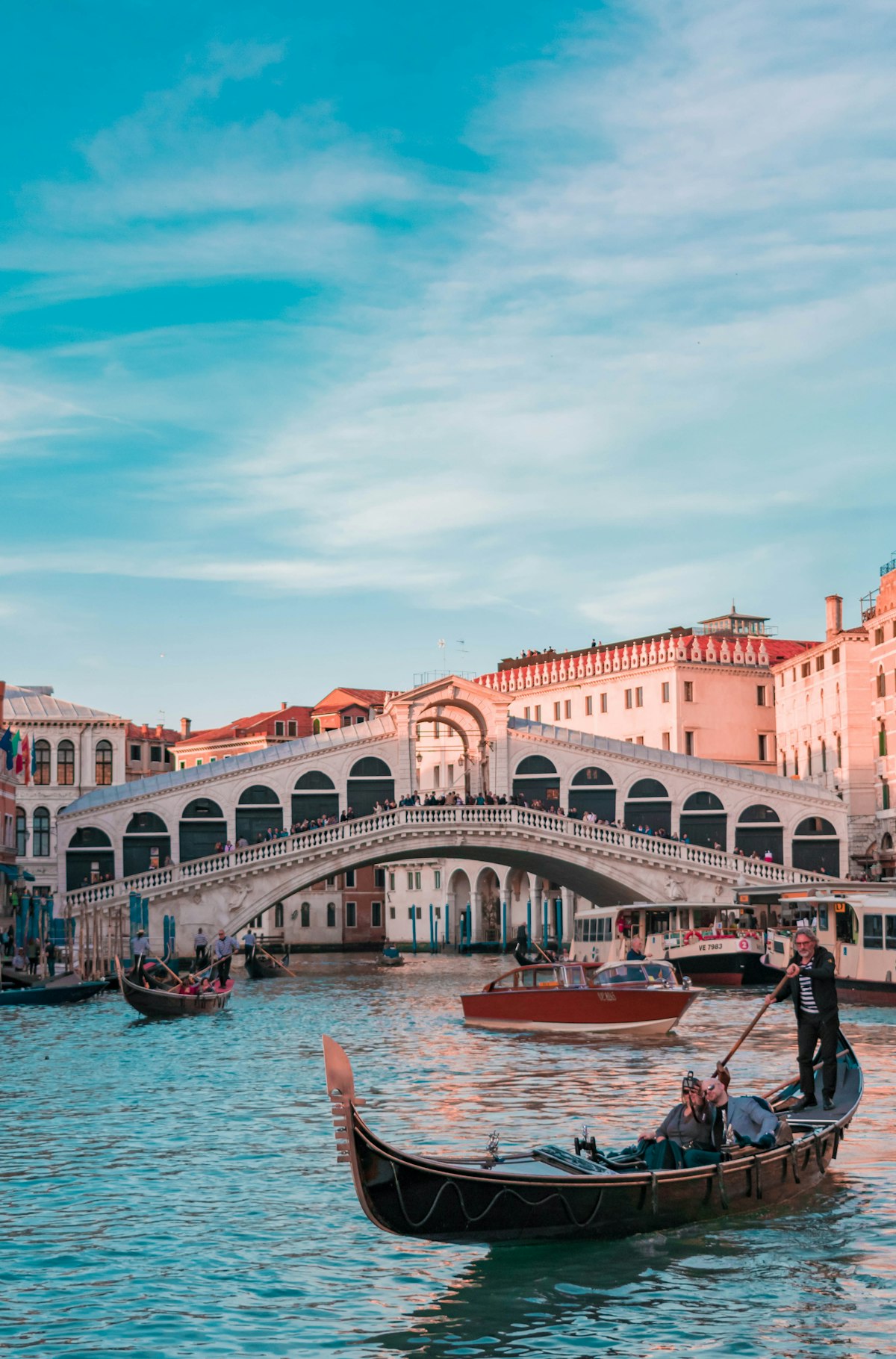
Veneto (Northern Italy, governed from Venice) has iconic locations (Venice Grand Canal, Rialto Bridge, Verona arena, Lake Garda) but the slowest permitting timeline in Italy. The Venetian Regional Film Commission is understaffed and processes permits at 30 to 42 days for standard locations and 40 to 60 days for heritage sites (Venice is almost entirely UNESCO). The Venice city authority (Comune di Venezia) also requires additional approval for filming in the historical centre because of strict cultural-protection rules. Permits for interior buildings, bridges, or canal-adjacent filming require separate authorization from the Venice Authority for Cultural Heritage, which can add another two to three weeks. A production that wants to film a scene in a Venetian palazzo (interior) faces 40 to 60 day permitting through a three-step process: regional film commission approval, Venice municipal authority approval, and cultural heritage authority approval. Sequential processing (each step waits for the previous step to complete) can stretch the timeline to 75 to 90 days. Parallel processing (submissions to all three entities simultaneously) compresses to 40 to 60 days, but requires a specialist fixer who knows all three authorities and can coordinate submissions.
Venice itself has become increasingly restrictive toward film crews. The city limits the number of filming days per year per location and charges escalating daily fees (EUR 1K to 5K per day depending on location sensitivity). The Grand Canal, St. Mark's Square, and Rialto Bridge are the most restricted. An alternative is to shoot in Verona (easier permitting, 20 to 28 days, lower fees), which offers medieval architecture and civic squares that can serve as Venice substitutes in post-production if carefully composed. Lake Garda (shared by Veneto, Lombardy, and Trentino) has the fastest Veneto permitting (15 to 20 days) because it is less culturally protected than Venice. A production that wants a "Venetian" aesthetic can often achieve it more efficiently in Verona or through a combination of Venice establishing shots (shot second-unit during a minimal-permit pass) and Verona interiors (shot principal unit). The establishing shot of the Rialto Bridge (5-second duration) can be sourced from a second-unit shoot or stock footage, and the character work (dialogue, emotion, plot) can be shot in Verona's similar medieval locations.
Veneto crew costs are 15 to 25 percent higher than Rome because the labour market is tight and union rules are strictly enforced. Accommodation in Venice is extremely expensive (EUR 150 to 300 per person per night) due to tourism; Verona and Lake Garda areas are EUR 80 to 120 per person per night. A 30-person crew in Venice costs EUR 7K to 10K per week in accommodation alone. The strategic choice for productions interested in Veneto is to avoid Venice proper and shoot in Verona or Lake Garda, where permits are faster, crew is more available, and accommodation is affordable. Venice should be reserved for second-unit establishing shots or minimal-crew scenes that justify the permitting and cost overhead. A production that commits to Venice as the primary location should budget EUR 30K to 50K in permitting delays and location fees, plus EUR 7K to 10K per week in accommodation premiums, making the total Venice cost roughly 40 to 50 percent higher than equivalent production in Toscana or Puglia.
Regional comparison matrix: permits, costs, crew, tax incentives
The permit timeline comparison: Toscana 10 to 14 days (non-heritage) fastest, Puglia 15 to 21 days, Sicilia 20 to 28 days, Veneto 30 to 42 days slowest. Heritage sites: Toscana 15 to 25 days (no MIC, regional Superintendence only), Puglia 20 to 28 days, Sicilia 25 to 35 days (plus SFC coordination), Veneto 40 to 60 days. The cost comparison: Puglia EUR 60 to 90 per person per night accommodation, lowest labour, 45 to 50 percent incentive with local hiring. Toscana EUR 70 to 110 per night, established crew, 40 percent base incentive, fastest permits. Sicilia EUR 70 to 100 per night, 40 to 50 percent incentive if Sicilian cultural engagement, heritage site fees (EUR 500 to 2K per day typical). Veneto EUR 150 to 300 per night (Venice premium), fastest Labour 15 to 25 percent premium, 40 percent base incentive, lengthy permits. The crew-availability comparison: Toscana has the most established crew pool (gaffers, grips, assistants consistently available). Puglia has growing crew availability but specialization is lower. Sicilia has moderate crew availability in Palermo and Catania. Veneto (Venice) has tight availability and premium labour costs.
Strategic selection: (1) For fastest permits and lowest cost: Puglia. (2) For established crew pool and predictability: Toscana. (3) For cultural-incentive upgrade: Sicilia (if narrative allows). (4) For iconic backdrop despite cost and timelines: Veneto (Venice, Verona). (5) For balanced regional appeal and cost-per-day: Puglia or Toscana. A typical three-week production will save EUR 25K to 50K by choosing Puglia over Rome in accommodation, location fees, and crew labour, and will gain 10 to 20 days by avoiding Rome's baroque permit and heritage procedures. The regional choice is a material decision in production planning and should drive location-scouting strategy.
Direct booking advantage: each region has regional film commission and tourism office contacts, and direct negotiation with local accommodation providers (hotels, serviced apartments) typically yields 25 to 35 percent discounts on published rates for committed crew blocks. Puglia and Sicilia are particularly receptive to direct bookings because they are growth markets and property operators are motivated to build relationships with producers. Toscana and Veneto have more established OTA presences (due to tourism), making direct negotiation slightly less advantageous but still yielding 15 to 25 percent discounts for four-week crew blocks. A production that coordinates with a regional film commission and a local accommodation provider can unlock a dual saving: regional incentive uplift (5 to 10 percent in Puglia and Sicilia) plus direct-booking accommodation discount (25 to 35 percent), compounding to a total 30 to 45 percent cost advantage over Rome or Veneto. This cumulative advantage is the reason why growing numbers of international productions are choosing regional Italian locations over Rome.
Why direct booking matters for this service
Every topic in this guide comes back to the same economic reality: the OTA commission model adds 15 to 22 percent to the price a traveller pays Italian accommodation operators, while adding nothing to the quality or reliability of the stay. Direct Bookings Italy’s 111,000+ verified Italian properties exist to eliminate that markup. On a typical group or long-stay booking, the savings land at 15 to 25 percent of the list price, and the service flexibility (date changes, extensions, master billing, early breakfast, custom meals) is materially better than OTA support lines can offer.
The second reason direct booking matters here is operational. Italian accommodation is mostly small independent operators, many family-run, where the person answering the phone is the person who owns the business. That relationship is where the real flexibility lives: a last-minute room block addition for an extra pilgrim, a crew kitchenette negotiated at no extra cost, a discreet shift of check-in time for a bridal party, a chaplain suite comped for a parish group. These accommodations happen routinely in direct relationships and almost never through OTA support queues. For any of the service lines above, the direct booking path produces a better and cheaper experience.
How Direct Bookings Italy supports Film Production Logistics
Planning a shoot in Italy? Direct Bookings Italy coordinates crew accommodation, master billing, and long-stay negotiation for productions of every scale. See our film production support.
Frequently asked questions
Which Italian region has the fastest film permits outside Rome?
Toscana (Florence region): 10-14 days for non-heritage, 15-25 days for heritage sites (regional Superintendence, no MIC). Puglia: 15-21 days. Sicilia: 20-28 days. Veneto: 30-42 days (slowest). Toscana is fastest but Puglia offers better cost structure.
What is the cheapest region in Italy for crew accommodation and filming?
Puglia: EUR 60-90 per person per night, 10-15% lower labour costs than Rome, 45-50% film incentive with 30% local crew hire. Total production cost 30-40% lower than Rome. Long-term crew blocks (4+ weeks) unlock additional 25-35% accommodation discounts.
Does Sicilia offer a special film incentive for cultural projects?
Yes. Sicilian Film Commission offers 45-50% incentive (vs. national 40%) for productions with Sicilian cultural or historical narrative. Requires additional documentation and adds 4-6 weeks to approval, but incentive uplift is material (EUR 5-10M on major productions). Ideal for co-productions with Italian partners.
Why is Veneto (Venice, Verona) so much slower to permit than other regions?
Venice Regional Film Commission is understaffed (30-42 day timeline). Venice historic centre requires dual approval: Regional Film Commission plus Venice Cultural Heritage Authority (adds 2-3 weeks). Alternative: shoot Verona (20-28 days) or Lake Garda (15-20 days) instead. Venice should be reserved for second-unit establishing shots.
Explore More of Italy
Continue planning your Italian adventure: Venetian Islands, Naples Deep Dive, Rome Filming Locations Guide 2026. Book accommodation directly through DirectBookingsItaly.com to save 15-25% on your stay.