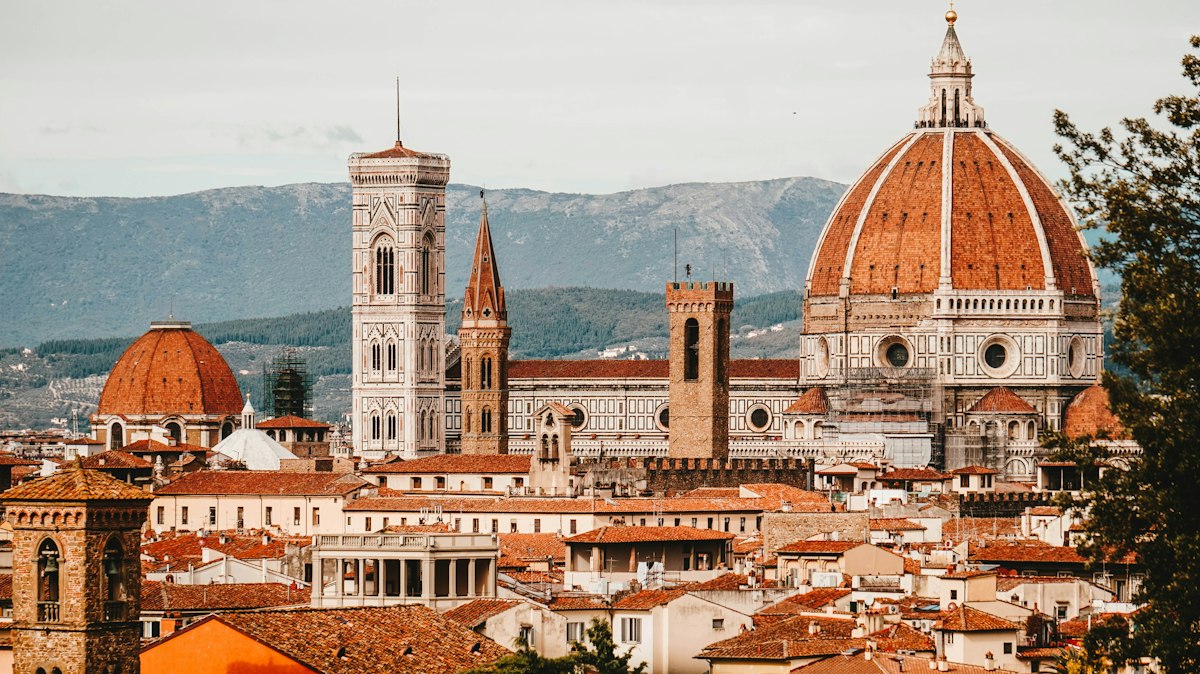
Five Italian university cities dominate faculty-led group bookings: Bologna (90,000 students, lowest costs), Padua (50,000 students, best Venice access), Florence (45,000 students, art-historical depth), Rome (95,000 across Sapienza and other institutions, most resources), and Milan (120,000 across Bocconi and Politecnico, highest prestige but highest costs). Each city offers distinct accommodation infrastructure, day-trip geography, and academic specialization. Understanding the trade-offs helps you choose the base that matches your programme length, budget, and curriculum.
Bologna: the most affordable and most compact student base
Bologna hosts the University of Bologna (founded 1088), one of Europe's oldest continuously operating universities, and is the default choice for US faculty-led groups prioritizing per-student costs. The city has 90,000 enrolled students (about 12 percent of the city population), extensive affordable student housing, and is easily navigable on foot (8 km city centre to periphery). Student accommodation clusters around Via Irnerio and the adjoining residential colleges (collegio), with three-bed dorms at 24 to 35 EUR per person per night including breakfast, and four-bed dorms at 20 to 28 EUR per person per night.
Bologna has Europe's longest covered portico network (40 km of continuous covered walkways connecting the university quarter to the historic centre). This eliminates rain delays and makes the city feel like one continuous indoor-outdoor classroom. The archaeological museum (Museo Civico Archeologico), the art museum (Pinacoteca), and the library of the Basilica di Santo Stefano are all within 2 km. Day trips outward are straightforward: Modena (40 minutes by regional train), Parma (60 minutes), Ferrara (40 minutes), Ravenna (90 minutes via train and bus). A four-week programme in Bologna costs 12,500 to 15,200 EUR all-in for a 25-person group, or 500 to 608 EUR per person.
Bologna has fewer international tourists than Rome or Florence, which means fewer English-language menus and more pressure on students to use Italian in daily life. This is a strength if your goal is language acquisition but a weakness if your group has weak language skills. Student mensa meals cost 6 to 8 EUR. The Osteria dell'Inferno and dozens of working-class trattorias around the Mercato delle Erbe serve filling three-course meals for 11 to 15 EUR, an advantage for controlling group meal budgets.
Padua: the Venetian gateway with lower costs than Florence
The University of Padua (founded 1222) is one of Italy's three most prestigious universities (alongside Bologna and Sapienza Rome) and sits 40 km west of Venice, making Padua an ideal base for programmes combining university study with Venetian archaeology, architecture, or Italian history. Padua has 50,000 students, lower tourist density than Venice, and accommodation costs (28 to 42 EUR per person per night for student housing) between Bologna's and Florence's. The compact historic centre (2 km) is dominated by the basilica of St. Anthony and the historic university square (Prato della Valle).
Day-trip access is Padua's strategic advantage: Venice is 30 minutes by regional train (4 EUR per person round trip), Verona is 40 minutes, Lake Garda is 90 minutes. A four-week Padua programme easily accommodates twice-weekly day trips to Venice without exhausting students. The Museo dell'Ermitani holds medieval and Renaissance art; the Basilica has museum-quality frescoes. Padua's academic focus is strong on mathematics, engineering, medicine, and law, making it ideal for those specializations.
Padua has fewer English-language resources and fewer tourist amenities than Florence or Rome, which requires more preparation and Italian fluency from faculty. The student population is predominantly Italian (fewer international students than Bologna or Rome), which makes it slower for students to build informal English-speaking friendships but faster for language immersion. Meal costs are equivalent to Bologna (mensa 5 to 8 EUR, restaurants 12 to 18 EUR). Housing availability is tight in May and June (end of academic year), so book 12 weeks ahead.
Florence: highest costs, highest art-historical density
Florence is the art-historical centre of Italy and hosts the University of Florence (founded 1224). Student accommodation in Florence runs 35 to 60 EUR per person per night for group dorms or arranged flats, significantly higher than Bologna or Padua but comparable to mid-tier Rome. The Uffizi Gallery, Accademia (David statue), Palazzo Vecchio, the Cathedral, and the Bargello Museum are all within walking distance of each other and the student quarters. Most liberal arts, art history, and history programmes default to Florence because the academic density is unmatched.
The trade-off is cost and tourist saturation. Florence has 4 million tourists annually (versus 300,000 in Bologna), which raises restaurant and attraction prices, creates queues, and can make learning logistics difficult. Many faculty-led groups book a four-week Florence programme and run day trips to Siena (90 minutes), San Gimignano (90 minutes), Pisa (90 minutes), or Arezzo (60 minutes) rather than shifting their base. This is economically sound if the group's academic focus is Tuscan art and landscape.
Student meal costs in Florence are higher than elsewhere: mensa meals 8 to 11 EUR, casual restaurants 16 to 25 EUR, due to tourist pricing. A four-week Florence programme for 25 students costs 18,000 to 24,000 EUR (720 to 960 EUR per student), roughly 35 to 40 percent higher than Bologna. This cost is justified only if your curriculum requires Florence's specific art-historical resources. If your focus is medieval history, economic history, or Italian language, Bologna offers the same academic outcome at half the cost.
Rome: the largest university base with the most resources
Rome has the most university infrastructure in Italy: Sapienza (50,000+ students, one of Europe's largest public universities), Gregorian University, John Cabot University, and several other smaller institutions. Sapienza housing runs 40 to 70 EUR per person per night for students. The city contains the Colosseum, Roman Forum, Vatican, Pantheon, and dozens of churches with the frescoes and architecture that defined Western art. Day trips include Pompeii (4 hours by train), the Amalfi Coast (6 hours), and Etruscan sites in Tuscany (2 to 3 hours).
Rome's advantage is resource density: the Vatican Library, the American Academy in Rome (if your institution is a member), specialized archives, and thousands of English-language cultural and academic resources. Faculty with expertise in classical archaeology, papal history, Renaissance studies, or Roman urban development should base in Rome. The disadvantage is cost and scale: Rome is overwhelming for first-time visitors, and student accommodation is spread across six districts (Prati, San Lorenzo, Testaccio, Trastevere, Garbatella, EUR), making coordination harder. A four-week Rome programme costs 20,000 to 28,000 EUR for a 25-person group, or 800 to 1,120 EUR per student.
Rome has more English speakers than any other Italian university city, which weakens language immersion but improves logistics. Student mensa meals cost 7 to 10 EUR. Tourist-area restaurants charge 18 to 40 EUR. Book group accommodation in the San Lorenzo or Testaccio districts for lower costs and more authentic living; avoid Trastevere (too touristy) and the city centre core (too expensive). Accommodation in outer districts requires 15 to 25 minutes transit to the historic centre, but is 20 to 30 percent cheaper.
Milan: professional networks and business programmes only
Milan has Bocconi University (12,000 students, top business school), Politecnico di Milano (40,000 students, engineering and design), and Cattolica University (40,000 across multiple cities). Milan is the financial capital of Italy and is ideal for business, finance, design, or engineering programmes. Student accommodation runs 45 to 80 EUR per person per night, the highest outside luxury resort areas. Milan is not a tourism city in the traditional sense; it lacks the iconic attractions of Rome or Florence and requires a different educational approach.
Milan is excellent for professional networks and industry partnerships: the fashion district (Quadrilatero d'Oro), the Sforza Castle, the Duomo, the Pinacoteca di Brera, and proximity to the Swiss Alps (90 minutes) and Lake Como (60 minutes) provide some tourism value. However, a liberal arts programme based in Milan requires careful curriculum design to justify the cost premium. Most faculty-led groups that choose Milan do so because their institution has a formal partnership with Bocconi or Politecnico and can leverage institutional relationships.
Milan's advantage is corporate partnerships and internship placement. Many US business schools run Milan-based internship programmes rather than classroom-based study abroad. Meal costs are equivalent to Rome (7 to 10 EUR mensa, 18 to 40 EUR restaurants). Day trips to Como, Bergamo, Brescia, and Verona are accessible. A four-week Milan programme costs 22,000 to 30,000 EUR for a 25-person group, or 880 to 1,200 EUR per student. This is economically justified only if students have internship placements that offset the premium cost.
Why direct booking matters for this service
Every topic in this guide comes back to the same economic reality: the OTA commission model adds 15 to 22 percent to the price a traveller pays Italian accommodation operators, while adding nothing to the quality or reliability of the stay. Direct Bookings Italy’s 111,000+ verified Italian properties exist to eliminate that markup. On a typical group or long-stay booking, the savings land at 15 to 25 percent of the list price, and the service flexibility (date changes, extensions, master billing, early breakfast, custom meals) is materially better than OTA support lines can offer.
The second reason direct booking matters here is operational. Italian accommodation is mostly small independent operators, many family-run, where the person answering the phone is the person who owns the business. That relationship is where the real flexibility lives: a last-minute room block addition for an extra pilgrim, a crew kitchenette negotiated at no extra cost, a discreet shift of check-in time for a bridal party, a chaplain suite comped for a parish group. These accommodations happen routinely in direct relationships and almost never through OTA support queues. For any of the service lines above, the direct booking path produces a better and cheaper experience.
How Direct Bookings Italy supports University Group Bookings
Leading a university group to Italy? Direct Bookings Italy arranges master-billed accommodation for 15 to 50 students, with faculty room upgrades, meal plan flexibility, and late-arrival handling. See our university group bookings.
Frequently asked questions
Which Italian city has the cheapest student accommodation?
Bologna consistently offers the lowest rates: 20 to 35 EUR per person per night for group dorms. Padua is 5 to 10 EUR per night higher. Florence, Rome, and Milan are 35+ EUR. For a 25-person, four-week stay, Bologna saves 5,000 to 7,500 EUR compared to Florence or Rome.
Can US students get credits from Italian universities for study abroad?
Most no, unless you have a bilateral exchange agreement with the specific university. However, credits earned through your home institution while studying in Italy (via faculty-led programmes) typically transfer. Clarify credit terms with your registrar and Italian partner before enrolling students.
Is it difficult to find student accommodation in Italian university cities?
No, if you book 10 to 14 weeks ahead. Direct negotiation with student housing (collegio) or group rates through platforms like Airbnb or verified local hosts typically secures 20 to 30 percent discounts. Late booking (within 8 weeks) dramatically reduces availability and eliminates discounts.
Which city is best for Italian language immersion?
Bologna and Padua have the fewest English speakers and most pressure to use Italian daily. Rome and Florence have more English speakers due to tourism. Milan has large expat communities and more English-language business conduct. For pure language immersion, choose Bologna or Padua.
Explore More of Italy
Continue planning your Italian adventure: The Godfather in Sicily, Sardinia Road Trip, Regional Film Hubs Italy 2026. Book accommodation directly through DirectBookingsItaly.com to save 15-25% on your stay.